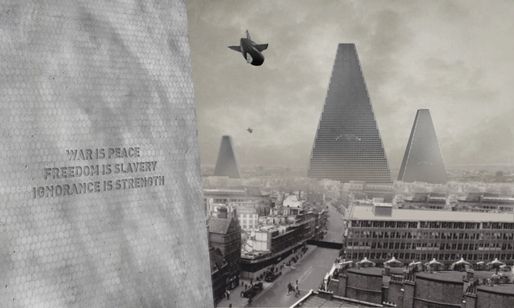
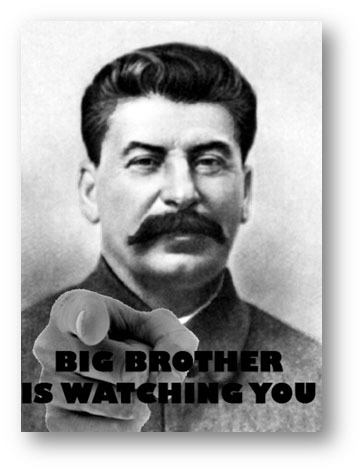
So an element of the first two chapters of 1984 that I found really intriguing were the Ministries that Winston described. The Ministry of Truth, Ministry of Peace, the Ministry of Love, and the Ministry of Plenty. As Winston discusses each one, it becomes clear that the ministries are in charge of the direct opposite of what they are called. Every one is an oxymoron, much like their slogans. Now, this strangeness is understandable in such a novel, but these contrasts reveal a lot when you look further into them. The Ministry of Truth “concerned itself with news, entertainment, education, and the fine arts”. All of these things are known for being misleading, biased, and troubled. There is always controversy surrounding them and agreements on what is right or true are rarely made. The Ministry of Peace “concerned itself with war”. Now, some may argue that war brings peace, but war itself is the complete absence of peace and the presence of destruction and agony. The Ministry of Love “maintained law and order”. Law and order are not acts of love. They keep people in line and take away freedom rather than give it. Love is meant to be totally free and open. It does not have boundaries. Winston’s description of the ministry aids the contrast as he says it “was the really frightening one”, with no windows, a “maze of barbed-wire”, and other various barriers and guards. It is rather the absence of love that he recounts. Finally, the Ministry of Plenty “was responsible for economic affairs”. The economy is always discussed as being in a horrible state. It is usually associated with being anything but prosperous and something people grumble about. Now, the point I’m trying to make in pointing out the oxymoronic qualities in this passage is that what Big Brother puts out, is exactly the opposite of what’s inside. All of these names hold a positive quality. You’re like, “Oh, a ministry. That sounds so beneficial. Love, Plenty, Peace, Truth? Who doesn’t want that? That sounds wonderful.” The names of things blind us to their true purpose and make us interpret the words differently to fit the needs and wants of the controllers. Even the name “Big Brother” sounds comforting. The people are trained to think, “Aww big brother wants to take care of us and make sure we are happy. Aww big brother cares enough to watch us and make us follow the rules. He knows best.” What they hear in everyday speech has such a positive connotation, and the ugly truth hides behind it, influencing their every move until unhappiness and evil is the norm.
So an element of the first two chapters of 1984 that I found really intriguing were the Ministries that Winston described. The Ministry of Truth, Ministry of Peace, the Ministry of Love, and the Ministry of Plenty. As Winston discusses each one, it becomes clear that the ministries are in charge of the direct opposite of what they are called. Every one is an oxymoron, much like their slogans. Now, this strangeness is understandable in such a novel, but these contrasts reveal a lot when you look further into them. The Ministry of Truth “concerned itself with news, entertainment, education, and the fine arts”. All of these things are known for being misleading, biased, and troubled. There is always controversy surrounding them and agreements on what is right or true are rarely made. The Ministry of Peace “concerned itself with war”. Now, some may argue that war brings peace, but war itself is the complete absence of peace and the presence of destruction and agony. The Ministry of Love “maintained law and order”. Law and order are not acts of love. They keep people in line and take away freedom rather than give it. Love is meant to be totally free and open. It does not have boundaries. Winston’s description of the ministry aids the contrast as he says it “was the really frightening one”, with no windows, a “maze of barbed-wire”, and other various barriers and guards. It is rather the absence of love that he recounts. Finally, the Ministry of Plenty “was responsible for economic affairs”. The economy is always discussed as being in a horrible state. It is usually associated with being anything but prosperous and something people grumble about. Now, the point I’m trying to make in pointing out the oxymoronic qualities in this passage is that what Big Brother puts out, is exactly the opposite of what’s inside. All of these names hold a positive quality. You’re like, “Oh, a ministry. That sounds so beneficial. Love, Plenty, Peace, Truth? Who doesn’t want that? That sounds wonderful.” The names of things blind us to their true purpose and make us interpret the words differently to fit the needs and wants of the controllers. Even the name “Big Brother” sounds comforting. The people are trained to think, “Aww big brother wants to take care of us and make sure we are happy. Aww big brother cares enough to watch us and make us follow the rules. He knows best.” What they hear in everyday speech has such a positive connotation, and the ugly truth hides behind it, influencing their every move until unhappiness and evil is the norm.
 coffee & contemplation
“The names of things blind us to their true purpose and make us interpret the words differently to fit the needs and wants of the controllers”. Love this quote of yours!!! It is sooo applicable to the modern world and to the book. I mean who would dare argue against a Ministry seemingly devoted to Peace or Love? You see it so much in American politics too, with terrifying laws being given great names with buzzwords like “freedom” or “fairness” regardless of what the bill is actually about.
Anyway, loved how you chose to discuss the ministries and their hypocrisy, since they are just such a cool part of the book! Really insightful analysis!
LikeLike
I love how you unpack the irony of each Ministry. Great recognition of how Ingsoc cloaks evil using Newspeak: “What they hear in everyday speech has such a positive connotation, and the ugly truth hides behind it, influencing their every move until unhappiness and evil is the norm.” Nice work, Ceili!
LikeLike